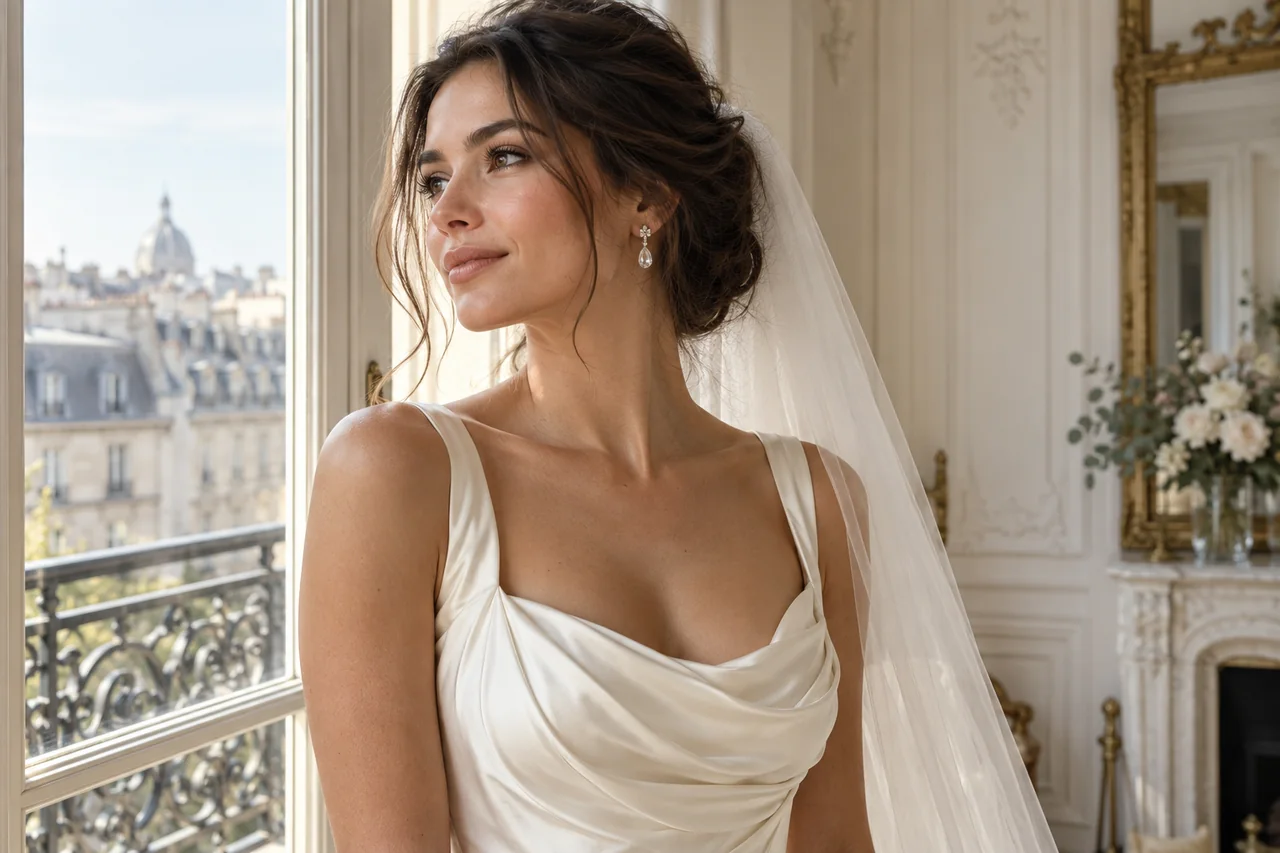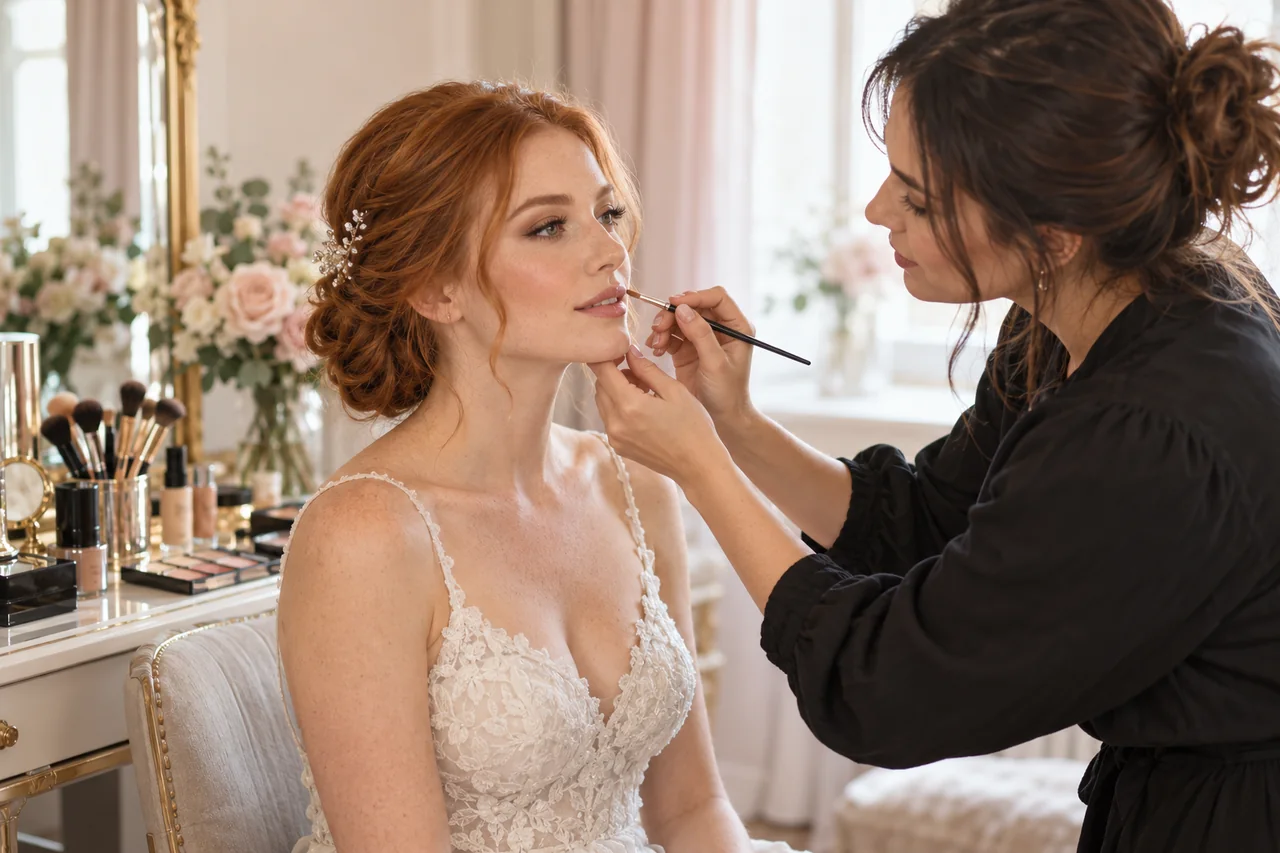
A wedding makeup timeline is a planning tool, not a rule that every bride must follow. The useful sequence is to confirm the day’s logistics, choose an artist or a self-applied routine, test the look and protect enough time on the morning. If you are planning a wedding in France from another country, travel and communication belong in that sequence from the beginning.
Start with the ceremony and work backwards
Write down the ceremony time, the required arrival time and the journey from the getting-ready room. Then add dressing, photographs before departure and a buffer. Ask the artist to estimate makeup time for the agreed look. Do not copy a fixed duration from another bride’s schedule and assume it will work for your appointment.
Hair and makeup may overlap or need separate blocks depending on the team. Confirm the sequence together, including who makes the final adjustments after the veil and dress are in place. If several people are receiving services, ask the professionals to propose an order rather than building it around everyone’s preferred appointment time.
Your own final slot should reflect the departure deadline and your comfort, not an automatic assumption that the bride always goes last. Some brides need makeup completed before getting into a complex outfit; others prefer a later finish. Give the team the real constraints and ask them to explain the plan.
Once the date and venue are confirmed
Begin checking availability if professional makeup is part of your plan. Popular dates and individual artists’ calendars differ, so there is no universal booking deadline. Ask about the named artist, replacement arrangements, travel costs, the trial and cancellation terms. Confirm what a deposit reserves and which services are included in writing.
Share the venue address and the likely getting-ready location, even if the final timetable is unfinished. An early start, remote property or second location may affect availability and costs. Mention the number of people requesting services, but distinguish confirmed appointments from guests who are merely considering them.
If you plan to do your own makeup, reserve practice time instead. Rehearse the full sequence with the skincare and products you will bring. Photograph it in different light and wear it for several hours. Self-application benefits from a timetable just as much as a professional appointment does.
Several months ahead, if you have the time
Use this period to discuss persistent skin concerns with a qualified clinician if needed. Treatments and recovery schedules should be individual, not borrowed from a generic bridal calendar. If your skin is comfortable, you may not need to add anything at all. Keep familiar care and gather information rather than automatically booking procedures.
Collect a small set of makeup references and one photograph of yourself you like. Add notes on coverage, eye definition, lip colour and finish. Include dress and hair ideas if available. A focused brief is easier to interpret than a large collection of contradictory looks saved over many months.
The trial window
Agree a trial date that allows changes before the wedding. If travel makes an early in-person appointment difficult, ask about an initial video consultation and a trial after arrival. Be clear about what can still be changed at that point. A late trial may be workable, but it leaves less room for another appointment or a new product test.
Bring your usual skincare details, sensitivity history, references and outfit information. Ask whether to arrive bare-faced and how to prepare. Keep notes on the final choices, take unfiltered photographs and wear the look afterwards when possible. Do not judge only the moment you leave the chair; comfort and wear deserve a longer observation.
After the trial, send one organised set of feedback. Describe the specific change and the part you want to keep. Confirm whether a second appointment is needed or whether small adjustments can be made on the day. Save the agreed details so neither you nor the artist has to rely on memory.
A month ahead: make the logistics concrete
Confirm names, appointment locations, supplier access and the number of services. Ask the venue when the getting-ready room opens and whether it has natural light, a chair, a table and suitable power. Share the photographer’s arrival time so preparation photographs do not unexpectedly interrupt the planned sequence.
Choose the touch-up products with your artist and practise using them. Buy or locate the agreed lip colour before travelling rather than assuming it will be stocked near the venue. Ask one person to carry the pouch and tell them when you would like a quiet check, such as after the ceremony or before dinner.
The final week: reduce decisions
Confirm the schedule and contact details again if anything has changed. Pack the familiar products, appropriate outfit for preparation, makeup pouch and any hair accessories the team needs. Put the written plan somewhere available without relying on a single person’s phone battery or internet connection.
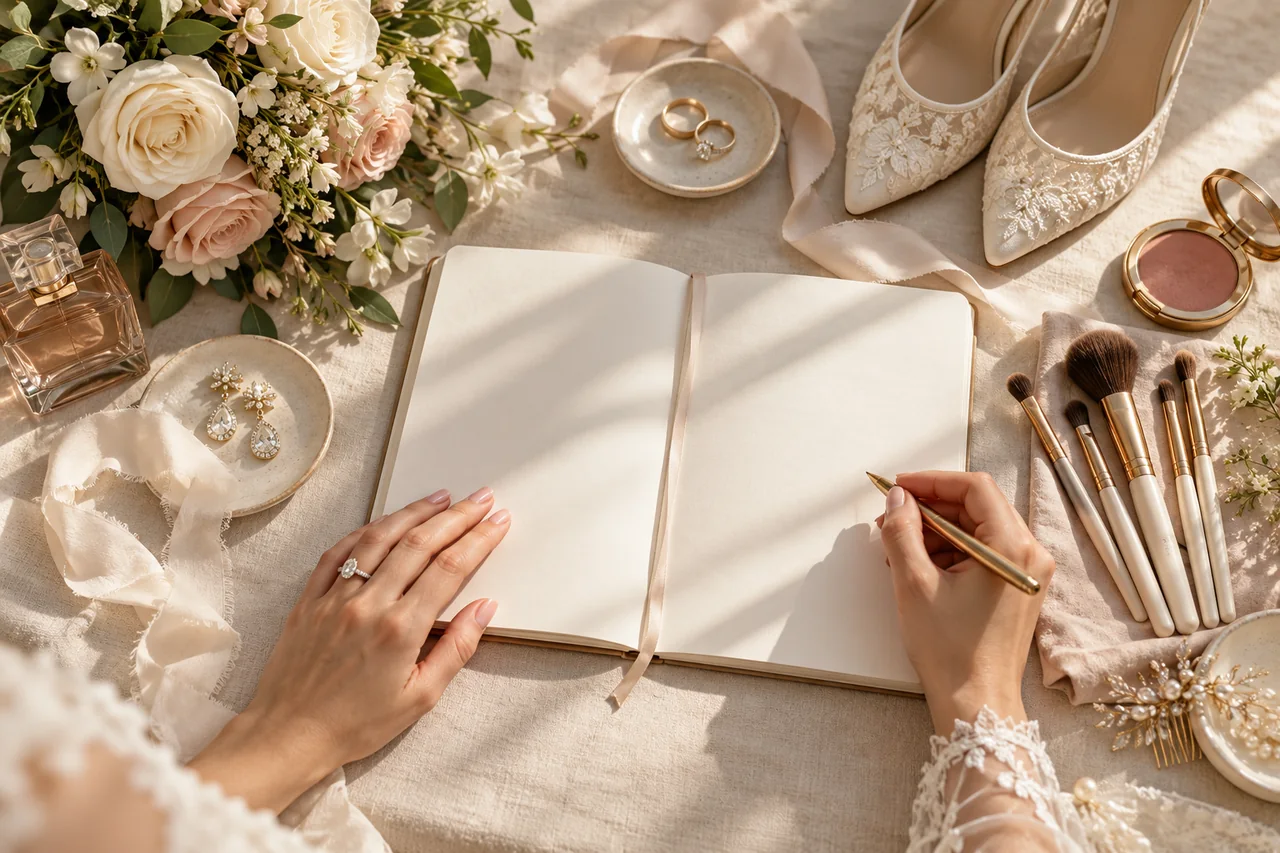
Prepare small personal tasks before the wedding morning. If you are writing cards to family or your wedding party, wedding wishes and blessing ideas may help you begin. Adapt the words to your beliefs and relationship rather than copying a message that does not sound like you. Finish the notes before the appointment starts.
Avoid introducing unfamiliar treatments or products because the date is approaching. Keep any grooming appointments consistent with your past response and professional advice. If irritation or another concern appears, contact the relevant professional and tell the artist. A timeline should help you make calmer decisions, not pressure you into completing every possible beauty task.
A sample wedding morning, with adjustable blocks
| Block | What belongs here |
|---|---|
| Room ready | Access, clear table, lighting, clean tools and supplies |
| Preparation | Familiar skincare, breakfast and agreed hair/makeup order |
| Beauty services | Artist-estimated time for each booked person |
| Final check | Veil, dress neckline, lipstick and kit handover |
| Departure buffer | Time for dressing delays, photographs and travel |
This sequence deliberately has no fixed clock times. Add them from your ceremony deadline and the professionals’ estimates. If the timetable only works when every block runs perfectly, it needs more room. Protect the departure buffer rather than treating it as spare time for another appointment or a last-minute photo request.
If something runs late
Choose a point person who can speak with the artist, photographer and coordinator while you remain in the chair. Agree the priorities beforehand: the bride’s appointment, departure and any time-sensitive ceremony requirements. A clear priority list helps people decide what can be shortened or moved without requiring you to answer every question.
If an artist becomes unavailable, follow the replacement arrangements in your agreement and verify who is coming. If a guest misses their slot, let the team judge whether it can be recovered. Do not squeeze several appointments into the bride’s protected time simply because everyone is now in the room.
The last check before you leave
Look at the finished makeup in a mirror, confirm the lip colour and check that the kit is with the right person. Tell the artist promptly if something feels uncomfortable. Once you depart, use the planned refresh moments and let the rest of the celebration happen. The timeline has done its job when it supports your day without becoming the day’s main focus.