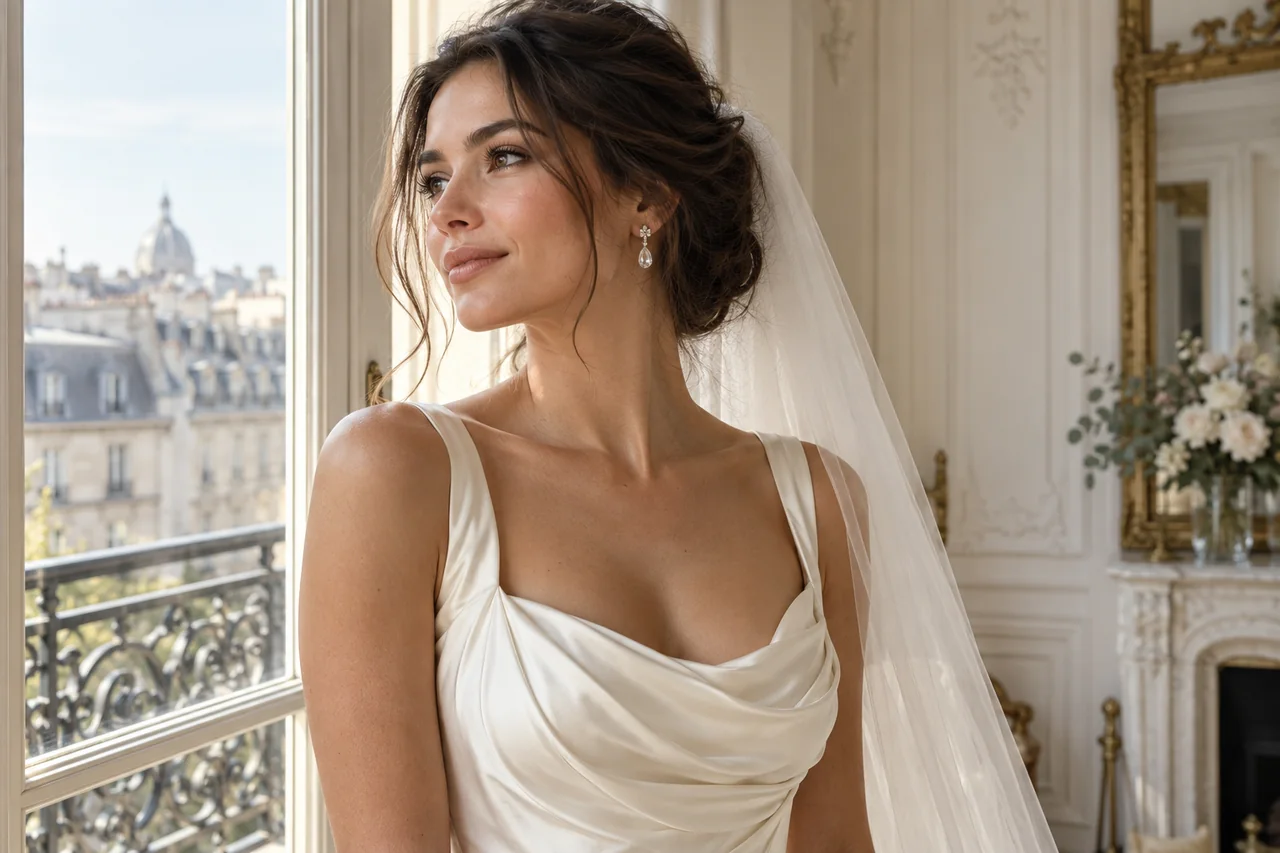
A Paris wedding can move through several kinds of light in a single afternoon: a hotel window, a civil ceremony room, open sky and a restaurant after dark. Bridal makeup works best when it feels comfortable across those settings. Start with your usual preferences, then test how the chosen look behaves during walking, photographs, meals and touch-ups. Paris is a setting, not a requirement to wear red lipstick or barely any foundation.
Begin with the route, not the inspiration board
Write down where you will get ready, where the ceremony takes place and how you will reach the reception. Include any portrait stops. A brief walk between buildings creates different demands from a long outdoor photo session followed by a taxi ride. Your artist needs that sequence more than a collection of city-themed beauty photographs.
Ask the photographer which parts of the day involve direct sun, shaded streets or indoor flash. You do not need to understand their equipment. You need enough information to test your makeup in comparable conditions. A trial photographed only under flattering salon lighting gives you an incomplete picture of the finished look.
Leave room in the schedule for getting dressed after makeup. A button-front shirt or robe avoids pulling a tight neckline over your face. If the dress has a high collar, tell the artist before they blend makeup onto the neck or upper chest. Product transfer is a practical concern that inspiration images rarely reveal.
Translate “French bridal” into specific choices
The phrase can mean a softly defined eye, a satin complexion, brushed brows or a stronger lip. None of these choices belongs to every French bride. Use the description as a starting point, then name what appeals to you: visible freckles, a muted rose mouth, minimal shimmer or a clean lash line.
Bring one photograph of yourself that you like, alongside a few references with similar colouring and features. Point out the individual detail you want from each image. Asking for the skin finish from one photograph and the eye shape from another gives an artist a clearer brief than asking to recreate an entire edited portrait.
For a red lip, test the shade with your dress or a fabric sample near your face. Consider how you feel after eating and drinking, and practise applying it without the artist. For a softer lip, check that the colour still feels intentional in wider portraits rather than disappearing against the dress.
Build a base for movement and changing light
Discuss where you want coverage rather than requesting a uniformly heavier foundation. You may prefer a little extra coverage around the nose and less across freckles. Ask to see the result close up and from a normal conversational distance. Skin texture is normal; a wedding look does not need to erase it.
Test your familiar moisturiser and sunscreen with the planned makeup. Pilling or separation can depend on the combination, application and timing. Changing every product together makes it difficult to identify the problem. Make one adjustment at a time during preparation, leaving enough opportunity to wear the combination again.
A restrained powder application can be easier to refresh than a thick initial layer. Ask the artist to show you the areas that usually need attention on your own face. Press blotting paper gently before adding powder, and avoid rubbing over concealer. The aim is controlled shine where you want it, without repeatedly rebuilding the base.
Prepare for the season without guessing the forecast
Do not plan around the idea that Paris always provides soft, cool light. Check the forecast close to your wedding and ask the venue about the getting-ready room. Heating, air conditioning and window direction can matter as much as the temperature outside. Keep a practical backup location for portraits if conditions change.
On a warm day, a shaded waiting place, drinking water and a small fan may make the experience more comfortable. On a cold day, consider a wrap that does not brush across lipstick or catch on hair accessories. Rain planning belongs with the photographer and coordinator, including umbrellas and how the dress will be carried.
Weather-resistant makeup claims are not a promise that a look will remain untouched all day. Tell your artist about watery eyes, contact lenses and products that have irritated you before. Testing a mascara or lash adhesive in advance is more useful than assuming a waterproof label makes it suitable for your eyes.
Photograph the trial in four ordinary conditions
Take an unfiltered photograph near a window, one outside in open shade, one indoors away from the window and one with flash. Keep the camera at a realistic distance as well as taking a close-up. These photographs help you discuss colour, shine and definition; they cannot perfectly predict the wedding photographer’s final work.
Wear the look for several hours if you can. Note what changes after a meal, after travelling and by the evening. Record observations such as “lip colour feels too cool” or “concealer gathered under my left eye.” A precise observation gives the artist something they can change at the next appointment.
Some products behave differently under flash, but sunscreen should not be abandoned for a photograph. Test the complete combination instead. The American Academy of Dermatology’s sunscreen guidance is a useful reference for protection; photography preferences can then be discussed around that care.
Ask these questions before confirming an artist
- Is the wedding date available, and who will attend if the named artist cannot?
- Does the portfolio include a range of skin tones, ages and makeup intensities?
- What is included in the trial, travel charge and wedding-day appointment?
- How are brushes cleaned, and are disposable applicators used where appropriate?
- Can the timetable accommodate your dress, hair appointment and departure time?
- Which lip or complexion products should you have for touch-ups?
Ask for the agreed services and cancellation arrangements in writing. Do not assume a package includes bridal-party makeup, an early start or a second location. A clear booking agreement makes the wedding morning easier to manage. If language is a concern, confirm how detailed preferences and sensitivities will be communicated before paying a deposit.
A small kit for a city wedding
Pack your tested lip colour, a compact mirror, blotting paper, tissues and the powder or concealer your artist recommends. Keep quantities small enough for the bag someone will actually carry. Ask that person where the kit will be during portraits and dinner; a useful product in an inaccessible hotel room cannot help you.
Add practical items outside the makeup pouch: comfortable shoes for travelling between locations, water and your confirmed transport details. Official visitor information at France.fr can help with broader destination research, but your venue and transport provider should confirm the arrangements for your specific day.
Questions brides often ask
Do I need a Paris makeup artist for a small ceremony?
No. You can do your own makeup if that feels manageable. Rehearse the full routine, photograph it and allow extra time. If you book an artist, choose on the strength of their work and communication rather than location alone.
Is a bold lip too much for daytime portraits?
A bold lip can work in daylight if you like how it looks and are comfortable maintaining it. Test the balance with eye makeup and blush. There is no single intensity that suits every face, outfit or ceremony.
Should my civil ceremony and reception makeup be different?
They can be the same. If you want an evening change, plan one achievable adjustment, such as a deeper lip or extra lash definition, and confirm who will apply it. Avoid relying on an unplanned full redo between events.